
Michele Kearney's Nuclear Wire - Major Energy and Environmental News and Commentary affecting the Nuclear Industry. Nuclear Activities
Wednesday, July 25, 2018
High temperatures to cut French nuclear production: EDF | S&P Global Platts
High temperatures to cut French nuclear production: EDF | S&P Global Platts: France s EDF expects nuclear-fired power production at its Bugey and Saint-Alban power stations to be curtailed due to extreme temperature forecast the utility said Tuesday.

Las Cruces City Council opposes nuclear waste facility in state
Las Cruces City Council opposes nuclear waste facility in state: The Las Cruces City Council on Monday approved a resolution opposing a proposed nuclear waste storage facility in southeastern New Mexico
EDF’s Flamanville nuclear reactor to face further delays | Financial Times
EDF’s Flamanville nuclear reactor to face further delays | Financial Times: French power utility EDF has said there will be further delays and cost overruns at its flagship Flamanville nuclear site.
EDF reveals further cost overruns and delays to its Flamanville nuclear reactor – The New Economy
EDF reveals further cost overruns and delays to its Flamanville nuclear reactor – The New Economy: Problems at EDF's long-awaited Flamanville Nuclear Power Plant will see the group's flagship EPR project encounter fresh delays and cost overruns, raising questions over its commercial viability
South Korea to restart two nuclear reactors to meet energy demands - Power Technology
South Korea to restart two nuclear reactors to meet energy demands - Power Technology: Two nuclear plants are to be restarted in South Korea, in a bid to tackle rising energy demands as the country's heatwave continues.
TASS: Business & Economy - Russia eyes building nuclear power plant in South Africa
TASS: Business & Economy - Russia eyes building nuclear power plant in South Africa: Russia and South Africa concluded an intergovernmental agreement on strategic partnership in the nuclear sphere in 2014
Mapped: The US nuclear power plants ‘at risk’ of shutting down
Mapped: The US nuclear power plants ‘at risk’ of shutting down: Nuclear power plants generate more than half of the US’s low-carbon electricity. However, record low gas prices associated with the US fracking boom have made many existing nuclear plants uncompetitive in the current market.
Xconomy: FDA Approves NorthStar Medical to Make Isotope Generator at WI Plant
Xconomy: FDA Approves NorthStar Medical to Make Isotope Generator at WI Plant: A Wisconsin company seeking to become the first domestic producer in decades of a crucial medical isotope said Tuesday that it received another key
Las Cruces City Council opposes nuclear waste facility in state
Las Cruces City Council opposes nuclear waste facility in state: The Las Cruces City Council on Monday approved a resolution opposing a proposed nuclear waste storage facility in southeastern New Mexico
EM News Flash July 25, 2018
EM News Flash | July 25, 2018 |
 DOE Under Secretary Dabbar to Speak at 2018 National Cleanup Workshop
Detailed Agenda Released
WASHINGTON, D.C. – DOE Under Secretary for Science Paul Dabbar is set to provide a keynote address at the 2018 National Cleanup Workshop, to be held Sept. 11-13 at the Hilton Alexandria Mark Center in Alexandria, Virginia.
Serving as DOE’s principal advisor on fundamental energy research,
energy technologies, and science, Dabbar oversees the environmental
cleanup and legacy management missions of DOE and is responsible for the
direct management over a majority of the Department’s national
laboratories. He joins DOE officials, industry executives, and state and local representatives participating at this year’s workshop.
The detailed agenda, including speakers and new sessions, is available here.
Session topics include:
The National Cleanup Workshop is hosted by the Energy Communities Alliance, and cooperating organizations include EM and the Energy Facility Contractors Group.
The workshop will bring together senior DOE executives and site
officials, industry executives, and other stakeholders to discuss EM’s
progress on the cleanup of the environmental legacy of the nation’s
Manhattan Project and Cold War nuclear weapons program.
For more information on the workshop, click here.
|
Donald Trump’s Dalliance With Vladimir Putin Has CIA Spies Spooked
Donald Trump’s Dalliance With Vladimir Putin Has CIA Spies Spooked: CIA spies are carrying on their work, but many veterans worry secret operations will be damaged—or worse.
The US Does Not Need New Tactical Nukes - Defense One
The US Does Not Need New Tactical Nukes - Defense One: There’s a false narrative afoot: that we lack the weapons to deter a Russian nuclear strike.
Tactical nuclear weapon launches into development with Pentagon policy bill
Tactical nuclear weapon launches into development with Pentagon policy bill: Defense policy bill contains $65 million for new submarine-launched low-yield, nuclear weapon.
Why can't existing nuclear plants make money in today's electricity markets? - Atomic Insights
Why can't existing nuclear plants make money in today's electricity markets? - Atomic Insights: What does it mean when nuclear plant owners tell people that their plants are struggling to make money in competitive markets as currently structured?
Framatome Reaches Le Creusot Data Review Milestone - News - Nuclear Power News - Nuclear Street - Nuclear Power Plant News, Jobs, and Careers
Framatome Reaches Le Creusot Data Review Milestone - News - Nuclear Power News - Nuclear Street - Nuclear Power Plant News, Jobs, and Careers: The latest nuclear news in Nuclear Power Industry about utilities, companies, suppliers in the nuclear energy market.
Barakah 1 receives generation licence - World Nuclear News
Barakah 1 receives generation licence - World Nuclear News: An electricity generation licence has been issued to Barakah One Company, a key regulatory requirement prior to operation of the UAE's first nuclear power plant. Meanwhile, further steps to develop the Emirati nuclear workforce.
EDF revises schedule, costs of Flamanville EPR - World Nuclear News
EDF revises schedule, costs of Flamanville EPR - World Nuclear News: Fuel loading at the Flamanville EPR will now take place in the fourth quarter of 2019, instead of the previously scheduled fourth quarter of this year. Its cost has increased from EUR10.5 billion to EUR10.9 billion.
What's really killing America's nuclear plants - World Nuclear News
What's really killing America's nuclear plants - World Nuclear News: The premature shutdown of America's nuclear power plants is nothing short of a national catastrophe, writes Jarret Adams.
All set for the new generation? - World Nuclear News
All set for the new generation? - World Nuclear News: The International Atomic Energy Agency is holding its Third International Conference on Human Resource Development for Nuclear Power Programmes next week. Here, Patricia Wieland, head of World Nuclear University (WNU), who will be a speaker at the event, shares her thoughts on working with young professionals. The conference, on 'meeting challenges to ensure the future nuclear workforce capability', is taking place on 28–31 May in Gyeongju, South Korea.
Viewpoint: Nuclear energy’s fate depends on the story we tell
Viewpoint: Nuclear energy’s fate depends on the story we tell
http://www.world-nuclear-news.org/Articles/Nuclear-Energy%E2%80%99s-Fate-Depends-on-the-Story-We-Tell
Tuesday, July 24, 2018
ANS Nuclear Policy Wire July 24, 2018
 |
|||
July 24, 2018
|
|||
|
|||
|
|
Oil Majors Are Stepping Up Their Natural Gas Game
Oil Majors Are Stepping Up Their Natural Gas Game: Integrated energy companies are increasingly turning to the burgeoning LNG industry to top up their earnings and reserves position, according to new research.
River Bend Nuclear Reactor Fallout Zone In Louisiana: Comment on USNRC GEIS – Deadline 10:59 pm CDT Tonight (Monday night) | Mining Awareness +
River Bend Nuclear Reactor Fallout Zone In Louisiana: Comment on USNRC GEIS – Deadline 10:59 pm CDT Tonight (Monday night) | Mining Awareness +: This blog is on UTC so may show the 24th. However, it’s still the 23rd in the US. Comment Due Jul 23, 2018 11:59 PM ET (10:59 CDT) Include Docket ID NRC-2017-0141 in the subject line of your …
Antarctica’s Nuclear Past - Neatorama
Antarctica’s Nuclear Past - Neatorama: Today it's hard to imagine a nuclear power plant in Antartica. Environmental regulations for the continent are pretty strict, and the many countries that operate on the continent are bound by them, with the goal of keeping Antartica as pristine as possible while conducting research there. But there was a small nuclear reactor at McMurdo Station in the 1960s, constructed to save money on shipping fuel to the American station.“Nukey Poo” began producing power for the McMurdo station in 1962, an...
IEA: World Is Not Spending Enough on Energy | RealClearEnergy
IEA: World Is Not Spending Enough on Energy | RealClearEnergy: IEA: World Is Not Spending Enough on Energy | RealClearEnergy
Nuclear Medicine: Leading Associations Meet to Strengthen Global Patients Care
Nuclear Medicine: Leading Associations Meet to Strengthen Global Patients Care
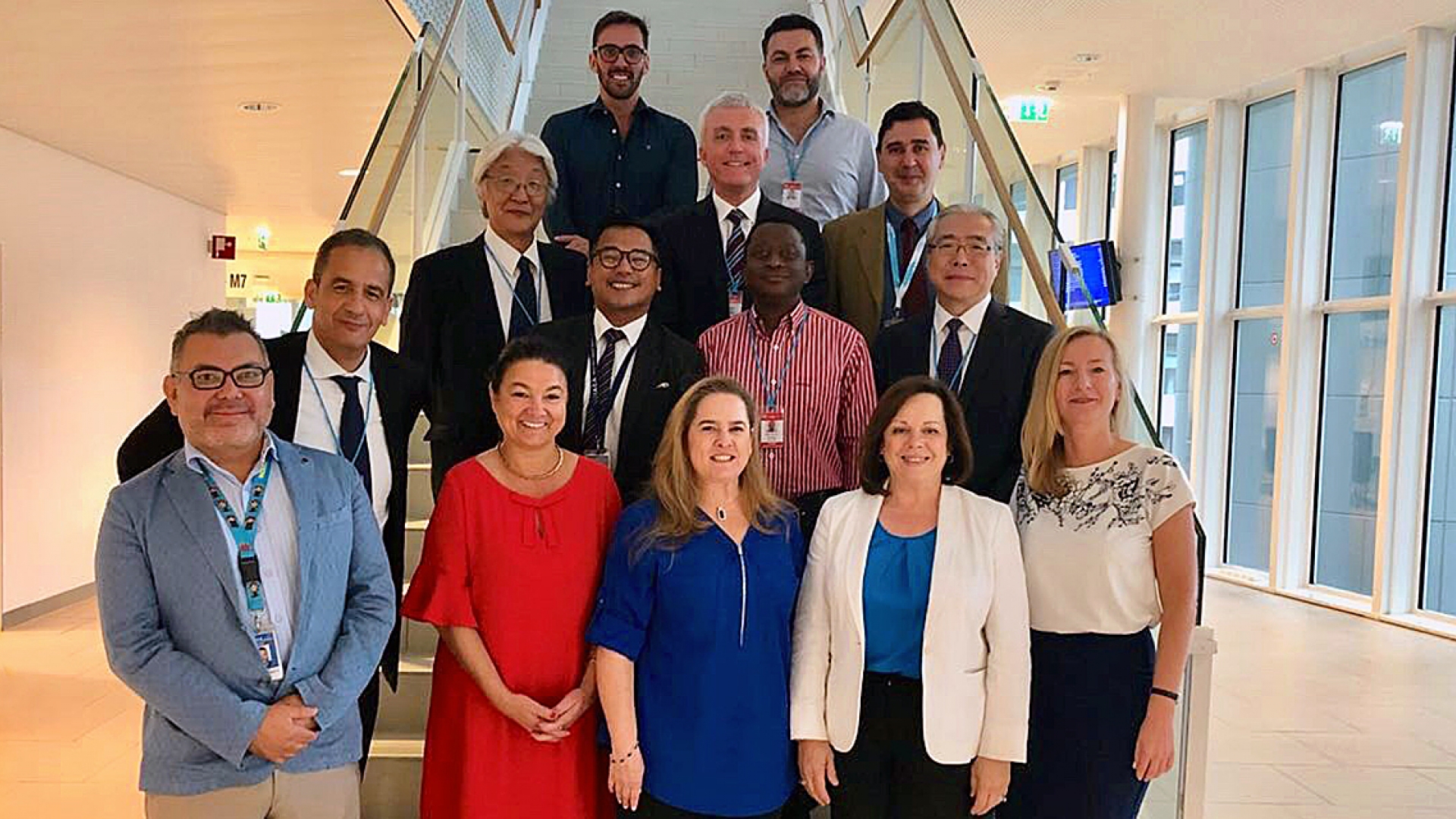
Participants at the nuclear medicine meeting at the IAEA headquarters in Vienna. (Photo: T. Pascual/IAEA)
Heads of associations and societies in nuclear medicine from
around the world met at the IAEA headquarters in Vienna last week in a
first-ever group meeting of such experts from all continents to examine
the opportunities and challenges they face in their work. On the last
day they issued a report containing recommendations endorsed by all
participants with the aim of further harmonizing several areas of
nuclear medicine, notably training and education.
“It was the first meeting where heads of all major professional organizations in the world came together to talk about global strategy, how nuclear medicine can improve patient health, the challenges currently arising and how we can work in cooperation with the IAEA,” said Professor Andrew Scott, President of the World Federation of Nuclear Medicine, who chaired the meeting.
During the weeklong meeting from 16 to 19 July, participants discussed issues including access to nuclear medicine in healthcare systems, the challenges faced by professionals to stay abreast the constant developments in the field, and the need to encourage and support research studies aimed at covering gaps in this medical science.
They also emphasized the importance of partnership and ongoing dialogue about advancements in nuclear medicine, and working together to establish a broad consensus to increase the impact of nuclear medicine in the management of major health conditions.
“It was the first meeting where heads of all major professional organizations in the world came together to talk about global strategy, how nuclear medicine can improve patient health, the challenges currently arising and how we can work in cooperation with the IAEA,” said Professor Andrew Scott, President of the World Federation of Nuclear Medicine, who chaired the meeting.
During the weeklong meeting from 16 to 19 July, participants discussed issues including access to nuclear medicine in healthcare systems, the challenges faced by professionals to stay abreast the constant developments in the field, and the need to encourage and support research studies aimed at covering gaps in this medical science.
They also emphasized the importance of partnership and ongoing dialogue about advancements in nuclear medicine, and working together to establish a broad consensus to increase the impact of nuclear medicine in the management of major health conditions.
Rapidly evolving new technologies
Topics
specially focused on education and training, with participants
highlighting the dynamic nature of the nuclear medicine field, which
evolves rapidly from one year to the next.
“There is a need to facilitate the training of professionals involved in the practice of nuclear medicine, so they can stay up-to-date with the novel applications and technologies and thereby better serve their patients,” said Diana Paez, Head of the Nuclear Medicine and Diagnostic Imaging Section of the IAEA’s Division of Human Health. “There are so many new developments coming to the field, therefore we have to provide a life-long education plans.”
As part of their discussions the participants addressed the differing standards of nuclear medicine training and education from region to region.
“There is a need to facilitate the training of professionals involved in the practice of nuclear medicine, so they can stay up-to-date with the novel applications and technologies and thereby better serve their patients,” said Diana Paez, Head of the Nuclear Medicine and Diagnostic Imaging Section of the IAEA’s Division of Human Health. “There are so many new developments coming to the field, therefore we have to provide a life-long education plans.”
As part of their discussions the participants addressed the differing standards of nuclear medicine training and education from region to region.
Facilitating innovation
The growing
demand for nuclear medicine services to manage an increasing number of
patients suffering from non-communicable diseases such as cancer,
cardiovascular diseases and neurological diseases requires an increase
in innovative nuclear technologies, the participants agreed.
The IAEA has worked for over 60 years to promote the use of nuclear medicine and it continues to collaborate with its Member States and other organizations through several mechanisms including improving infrastructure and training the multidisciplinary team of professionals. The aim is to help build or strengthen Member States capabilities with regard to the prevention, diagnosis and treatment of health conditions through the application of nuclear techniques, including nuclear medicine.
The IAEA plays an important role in providing experts in nuclear medicine with a platform to exchange ideas, experiences, knowledge and advice.
The IAEA has worked for over 60 years to promote the use of nuclear medicine and it continues to collaborate with its Member States and other organizations through several mechanisms including improving infrastructure and training the multidisciplinary team of professionals. The aim is to help build or strengthen Member States capabilities with regard to the prevention, diagnosis and treatment of health conditions through the application of nuclear techniques, including nuclear medicine.
The IAEA plays an important role in providing experts in nuclear medicine with a platform to exchange ideas, experiences, knowledge and advice.
High temperature reactors for energy neutral mineral extraction
High temperature reactors for energy neutral mineral extraction: High temperature gas cooled reactors have the potential to make the recovery of uranium from unconventional ores energy neutral, a four-year multinational International Atomic Energy Agency (IAEA) research project has found.
Ugandan officials train in radioactive waste handling - Daily Monitor
Ugandan officials train in radioactive waste handling - Daily Monitor: The AEC Chief Executive Officer, Mr Noah Deogratias Luwalira, described radioactive substances as those materials that emit ionising radiation. Examples
Yangjiang Unit 5 Enters Commercial Operation Status - News - Nuclear Power News - Nuclear Street - Nuclear Power Plant News, Jobs, and Careers
Yangjiang Unit 5 Enters Commercial Operation Status - News - Nuclear Power News - Nuclear Street - Nuclear Power Plant News, Jobs, and Careers: The latest nuclear news in Nuclear Power Industry about utilities, companies, suppliers in the nuclear energy market.
Statement by Brookhaven Lab, Jefferson Lab, and the Electron-Ion Collider Users Community on National Academy of Sciences Electron-Ion Collider Report
Statement by Brookhaven Lab, Jefferson Lab, and the Electron-Ion Collider Users Community on National Academy of Sciences Electron-Ion Collider Report: The following statement is being issued by the U.S. Department of Energy's Brookhaven National Laboratory and Thomas Jefferson National Accelerator Facility--along with the Electron-Ion Collider User Group--in response to a report issued today by the National Academies of Sciences, Engineering, and Medicine on the scientific case for a U.S.-based Electron-Ion Collider (EIC).
Department Of Energy Issues $2 Billion Tribal Energy Loan Guarantee Program Solicitation
Department Of Energy Issues $2 Billion Tribal Energy Loan Guarantee Program Solicitation
By By U.S. Department Of Energy, / July 23, 2018 10:00 AM

WASHINGTON D.C. — The U.S. Department of Energy (DOE) has issued the first loan guarantee solicitation for the Tribal Energy Loan Guarantee Program (TELGP) under DOE’s Loan Programs Office. This solicitation provides as much as $2 billion in partial loan guarantees to support economic opportunities for Native American and Alaska Native communities through energy development projects and activities.
Keep reading →https://breakingenergy.com/2018/07/23/department-of-energy-issues-2-billion-tribal-energy-loan-guarantee-program-solicitation/?utm_source=Breaking+Energy+Newsletters+Master+List&utm_campaign=97378b4778-MAILCHIMP_BD_DAILY&utm_medium=email&utm_term=0_88392479a3-97378b4778-411632309
6 of 48 Your Nuclear Decommissioning & Used Fuel Webinar Recordings
Last month, Nuclear Energy Insider hosted a webinar on the key
components for success during the transition from operations to
decommissioning, featuring insights from the Nuclear Energy Institute.
52% of listeners voted that they expect decommissioning costs to reduce in the future, and in another poll 32% voted that liaising with local stakeholders is a NPP’s biggest challenge in the transition from operations to decommissioning.
In case you couldn’t listen in on the day, I’ve made the recordings available – access them here.
Here’s a glimpse of what you’ll hear about in the recordings:
Many thanks,
Charlotte
Charlotte HowlettSenior Project Director
Nuclear Energy Insider
+1 800 814 3459 x7182 (US toll free)
+44 (0) 20 7375 7182 (Global)
chowlett@nuclearenergyinsider.
52% of listeners voted that they expect decommissioning costs to reduce in the future, and in another poll 32% voted that liaising with local stakeholders is a NPP’s biggest challenge in the transition from operations to decommissioning.
In case you couldn’t listen in on the day, I’ve made the recordings available – access them here.
Here’s a glimpse of what you’ll hear about in the recordings:
- Planning for the best use of resources: map-out the critical decommissioning steps required to deliver predictable results whilst optimizing resource allocation to predict efficiency
- Innovative business models: align work with core business competencies to achieve timely and compliant decommissioning, whilst optimizing NDT funds
- Minimizing the impacts of used fuel: accelerate the transfer of fuel to dry cask storage and beyond for more efficient and cost-effective progress
Many thanks,
Charlotte
Charlotte HowlettSenior Project Director
Nuclear Energy Insider
+1 800 814 3459 x7182 (US toll free)
+44 (0) 20 7375 7182 (Global)
chowlett@nuclearenergyinsider.
Key part for 2 nuclear reactors undergoes quake test
Key part for 2 nuclear reactors undergoes quake test: A key system for South Korea's nuclear power reactors underwent an earthquake resistance test on Monday, its developer said.
The Latest: Congress Drops Bid to Ease Nuke Agency Control | Business News | US News
The Latest: Congress Drops Bid to Ease Nuke Agency Control | Business News | US News: WASHINGTON (AP) — The Latest on legislation to remove the National Nuclear Security Administration from direct control of the Energy Department (all times local):
SNC-Lavalin to decommission research reactor
SNC-Lavalin to decommission research reactor: SNC-Lavalin's Candu Energy Inc is to provide decommissioning services for the Saskatchewan Research Council's Slowpoke-2 research reactor, the company announced yesterday.
High temperature reactors for energy neutral mineral extraction
High temperature reactors for energy neutral mineral extraction: High temperature gas cooled reactors have the potential to make the recovery of uranium from unconventional ores energy neutral, a four-year multinational International Atomic Energy Agency (IAEA) research project has found.
EM Update July 24, 2018

Mapped: The US nuclear power plants ‘at risk’ of shutting down
Mapped: The US nuclear power plants ‘at risk’ of shutting down: Nuclear power plants generate more than half of the US’s low-carbon electricity. However, record low gas prices associated with the US fracking boom have made many existing nuclear plants uncompetitive in the current market.
Yucca Mountain revival efforts appear dead – for now – Las Vegas Review-Journal
Yucca Mountain revival efforts appear dead – for now – Las Vegas Review-Journal: Efforts to restart licensing hearings and store nuclear waste at Yucca Mountain appear dead for the next year after a congressional panel eliminated a funding request in the defense bill Monday.
North Anna-2 reactor in Virginia nears 100% capacity after shutting for repairs | S&P Global Platts
North Anna-2 reactor in Virginia nears 100% capacity after shutting for repairs | S&P Global Platts: Dominion Energy s 994-MW North Anna-2 nuclear reactor in Louisa Virginia was operating at 99% of capacity early Monday morning after a company spokesman said Friday the unit was being shut for electri
US and Russia control most of the world's nuclear weapons
US and Russia control most of the world's nuclear weapons: Both Trump and Putin, who own the lion's share of the world's nukes, said ahead of their Helsinki summit that they would address the proliferation of nuclear weapons.
NASA Glenn Develops a Mini-Nuclear Reactor to Power Missions to the Moon and Beyond | WKSU
NASA Glenn Develops a Mini-Nuclear Reactor to Power Missions to the Moon and Beyond | WKSU: While nuclear power in Ohio is heading into the sunset, NASA Glenn in Cleveland has developed a portable nuclear energy system for outer space. In this
Who Wants to Buy a Pair of Half-Built Nuclear Reactors? Nobody - Bloomberg
Who Wants to Buy a Pair of Half-Built Nuclear Reactors? Nobody - Bloomberg: Nobody seems keen to buy the partially built V.C. Summer nuclear plant in South Carolina, so now the state’s biggest power provider is trying to sell off the equipment.
IAEA Project Connects Dots Between Unconventional Uranium Extraction and High Temperature Nuclear Power Reactors
IAEA Project Connects Dots Between Unconventional Uranium Extraction and High Temperature Nuclear Power Reactors
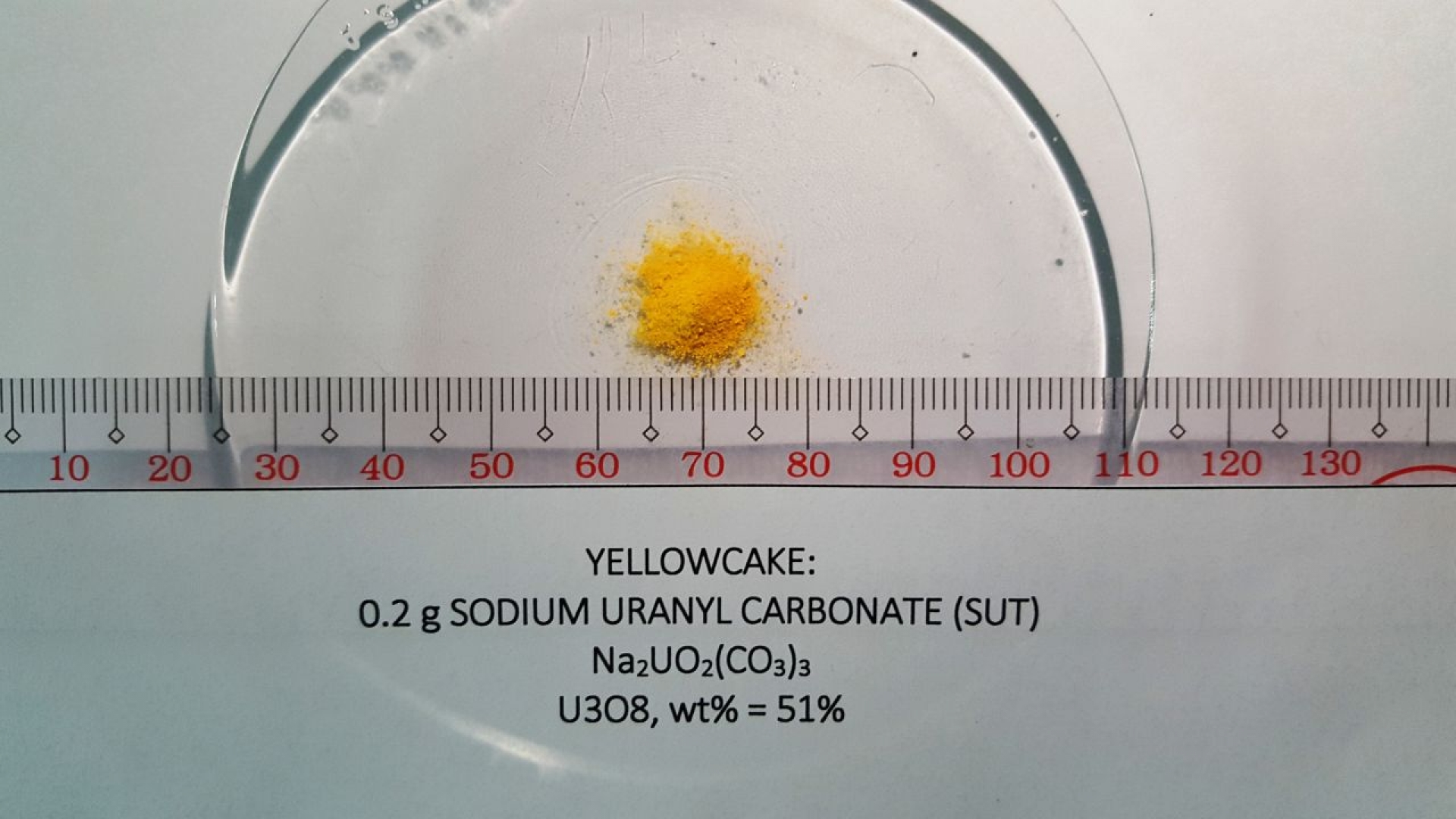
Recovery of uranium from phosphoric acid, also resulting in a cleaner fertilizer. (Photo: Philippine Nuclear Research Institute)
A multi-faceted IAEA research project linking unconventional
uranium extraction and high temperature nuclear power reactors has
reached its final phase. The project that involves 17 institutes from 16
Member States is focusing on how to make uranium production ‘energy
neutral’.
Primary ores such as phosphate rock (the basic ore from which fertilizer is made), copper and rare earth elements sometimes contain significant amounts of natural uranium and other valuable materials. Energy neutral mineral processing is the idea to recover these unconventional uranium resources as a byproduct during primary ore processing and use them, after enrichment and fuel production, to generate greenhouse gas lean energy with nuclear power reactors.
The IAEA’s coordinated research project on energy neutral mineral processing is a unique forum that brings together experts concerned with the development of high temperature reactors, as well as experts working in mineral processing and unconventional uranium extraction.
“It is quite a unique combination to conduct a coordinated research project that requires core competencies as different as mineral processing and high temperature reactor operation,” said Peter Woods, Team Leader in the IAEA’s Division of Nuclear Fuel Cycle and Waste Technology.
Frederik Reitsma, who leads IAEA’s gas cooled reactor technology development activities and serves as the Scientific Secretary of the Coordinated Research Project, added: “An elegant solution to consider for the future is to use heat and electricity from a small and modular high temperature reactor, built near the mineral processing plant, to process the raw material and have enough uranium by-product to be energy neutral. The research reported by the participating member states show this might be feasible.”
“Using reliable, inexpensive and greenhouse gas lean power from nuclear reactors for mineral development at processing centers but particularly at remote location is something the minerals processing industry long dreams of,” he said.
High temperature gas cooled reactors have been operated as research and prototype reactors since the 1960s and are currently experiencing increased interest. Two research reactors of this type are operating in Japan (HTTR, since 1998) and China (HTR-10, since 2000) and a demonstration plant is under construction in China (HTR-PM), planned to be commissioned soon.
Further environmental and health advances are also possible with this connection between the two technical areas: “That the extraction of uranium during mineral processing has the potential to greatly improve the quality of the final product and the environmental footprint of the mine tailings is what convinced our team to seriously consider this revolutionary approach and join the project at IAEA,” explained Dr. Nahhar Al Khaledi from the Radiation Protection Department in Kuwait.
Representatives from 15 Member States spread over five continents gathered in Vienna from 2 to 6 July for the final Research Coordination Meeting to discuss the progress and the challenges associated with energy neutral mineral processing. First results of this four-year project have already been made available in a joint article published in the scientific publication Sustainability earlier this year and will be supported by a comprehensive IAEA Technical Document (TECDOC) in 2019.
Primary ores such as phosphate rock (the basic ore from which fertilizer is made), copper and rare earth elements sometimes contain significant amounts of natural uranium and other valuable materials. Energy neutral mineral processing is the idea to recover these unconventional uranium resources as a byproduct during primary ore processing and use them, after enrichment and fuel production, to generate greenhouse gas lean energy with nuclear power reactors.
An elegant solution to consider for the future is to use heat and electricity from a small and modular high temperature reactor, built near the mineral processing plant, to process the raw material and have enough uranium by-product to be energy neutral.Energy neutrality is reached if the energy produced from the extracted uranium is equal to or larger than the energy required for primary ore processing, uranium extraction and fuel production. In the future, thorium might similarly contribute to energy neutrality in such an approach. Additionally, the naturally occurring radioactive material (NORM) is extracted in the process, leading to cleaner products (such as phosphoric acid for fertilizers) and tailings (such as phosphogypsum, which can be used as building material).
The IAEA’s coordinated research project on energy neutral mineral processing is a unique forum that brings together experts concerned with the development of high temperature reactors, as well as experts working in mineral processing and unconventional uranium extraction.
“It is quite a unique combination to conduct a coordinated research project that requires core competencies as different as mineral processing and high temperature reactor operation,” said Peter Woods, Team Leader in the IAEA’s Division of Nuclear Fuel Cycle and Waste Technology.
Frederik Reitsma, who leads IAEA’s gas cooled reactor technology development activities and serves as the Scientific Secretary of the Coordinated Research Project, added: “An elegant solution to consider for the future is to use heat and electricity from a small and modular high temperature reactor, built near the mineral processing plant, to process the raw material and have enough uranium by-product to be energy neutral. The research reported by the participating member states show this might be feasible.”
“Using reliable, inexpensive and greenhouse gas lean power from nuclear reactors for mineral development at processing centers but particularly at remote location is something the minerals processing industry long dreams of,” he said.
High temperature gas cooled reactors have been operated as research and prototype reactors since the 1960s and are currently experiencing increased interest. Two research reactors of this type are operating in Japan (HTTR, since 1998) and China (HTR-10, since 2000) and a demonstration plant is under construction in China (HTR-PM), planned to be commissioned soon.
Further environmental and health advances are also possible with this connection between the two technical areas: “That the extraction of uranium during mineral processing has the potential to greatly improve the quality of the final product and the environmental footprint of the mine tailings is what convinced our team to seriously consider this revolutionary approach and join the project at IAEA,” explained Dr. Nahhar Al Khaledi from the Radiation Protection Department in Kuwait.
Representatives from 15 Member States spread over five continents gathered in Vienna from 2 to 6 July for the final Research Coordination Meeting to discuss the progress and the challenges associated with energy neutral mineral processing. First results of this four-year project have already been made available in a joint article published in the scientific publication Sustainability earlier this year and will be supported by a comprehensive IAEA Technical Document (TECDOC) in 2019.


Monday, July 23, 2018
LOAD TESTING HELPS ENSURE PROJECT SAFETY | Barnhart Blog
LOAD TESTING HELPS ENSURE PROJECT SAFETY | Barnhart Blog: Barnhart Crane & Rigging provides innovative solutions to complex lifting and transportation challenges faced by heavy industry from power generation to petrochemical to renewable energy, and beyond.
Westinghouse Fuel Reaches Milestone In Ukraine - News - Nuclear Power News - Nuclear Street - Nuclear Power Plant News, Jobs, and Careers
Westinghouse Fuel Reaches Milestone In Ukraine - News - Nuclear Power News - Nuclear Street - Nuclear Power Plant News, Jobs, and Careers: The latest nuclear news in Nuclear Power Industry about utilities, companies, suppliers in the nuclear energy market.
DCNS Working with AREVA, EDF, and CEA for Undersea Small Modular Reactor Development - News - Nuclear Power News - Nuclear Street - Nuclear Power Plant News, Jobs, and Careers
DCNS Working with AREVA, EDF, and CEA for Undersea Small Modular Reactor Development - News - Nuclear Power News - Nuclear Street - Nuclear Power Plant News, Jobs, and Careers: The latest nuclear news in Nuclear Power Industry about utilities, companies, suppliers in the nuclear energy market.
Gov't to nurture 800 experts in nuclear sector
Gov't to nurture 800 experts in nuclear sector: The South Korean government plans to nurture some 800 experts in the nuclear sector by 2021, with the focus on enhancing the safety of nuclear plants and decommissioning efforts, the ICT ministry said Monday.
Rolls-Royce threatens to end ‘mini-nuke’ project for lack of support | Financial Times
Rolls-Royce threatens to end ‘mini-nuke’ project for lack of support | Financial Times: Aero-engine maker wants long-term government commitment, including financial support
Review for repaired isotope production facility
Review for repaired isotope production facility: A mechanical failure that caused the suspension of Australian manufacture of technetium-99m (Tc-99m) generators has been addressed, but resumption of production is still some weeks away, the Australian Nuclear Science and Technology Organisation (ANSTO) said on 20 July. ANSTO is continuing to import generators of the medical isotope from the USA.
Korea relies on nuclear to cope with heat wave
Korea relies on nuclear to cope with heat wave: Korea Hydro and Nuclear Power (KHNP) has decided to restart Hanbit 3 and Hanul 2 in the second and third week of August in order to meet growing demand for electricity as the summer heat wave continues, Korea JoongAng Daily reported today. The units have been offline for maintenance work since the second week of May and are expected to be brought back online by 12 August.
India says French and US vendor talks ongoing
India says French and US vendor talks ongoing: India is in active talks with French and US companies on projects to build new nuclear power plants at Jaitapur and Kovvada, the country's minister of state, Jitendra Singh, has confirmed to parliament.
Japan to deploy large patrol boats to guard nuclear plants - The Mainichi
Japan to deploy large patrol boats to guard nuclear plants - The Mainichi: TOKYO (Kyodo) -- The Japan Coast Guard will deploy two large patrol vessels to areas of the Sea of Japan to reinforce protection of nuclear power plan
[Editorial] Back to nuclear energy
[Editorial] Back to nuclear energy: With electricity demand surging due to the sweltering heat, the government, which has vowed to stop using nuclear energy, is paradoxically increasing the use of nuclear power plants.Electricity demand peaked at 86,306 megawatts on July 16, surpassing the previous high of 85,183 megawatts on Aug. 12, 2016. Power demand further peaked at 87,591 MW and 88,080 MW last week on Thursday and Friday, respectively. Both figur...
Nuclear reactors switched back on as heat wave continues-INSIDE Korea JoongAng Daily
Nuclear reactors switched back on as heat wave continues-INSIDE Korea JoongAng Daily: The Korea Hydro & Nuclear Corp. (KHNP) has decided to restart suspended nuclear plants in order to meet the growing demand for electricity as the summer heat wave continues.
The state-run nuclear power operator on Sunday said it will be rebooting
The state-run nuclear power operator on Sunday said it will be rebooting
Azarga Uranium Provides Update on Permitting Process - Junior Mining Network
Azarga Uranium Provides Update on Permitting Process - Junior Mining Network: Vancouver, BC (FSCwire) - AZARGA URANIUM CORP. (TSX:AZZ) (“Azarga Uranium” or the “Company”) is pleased to announce that the Atomic Safety ...
EPA works best when rule of law governs and science leads | My View | santafenewmexican.com
EPA works best when rule of law governs and science leads | My View | santafenewmexican.com: New Mexicans are beginning to hear a lot of claims about Holtec’s proposed interim spent nuclear fuel storage site between Hobbs and Carlsbad (“Fatal flaws in plan for fuel rods
Radiation And The Value Of A Human Life
Radiation And The Value Of A Human Life: The 63rd HPS meeting in Cleveland discussed, among other things, how much we are spending trying to adhere to absurdly-low radiation limits fostered upon society by the LNT, trying to save one theoretical life while not saving millions of real lives for the same amount of money.
Remembering antarctica's nuclear past with 'nukey poo'
Remembering antarctica's nuclear past with 'nukey poo': We think of Antarctica as a place to protect. It's "pristine", "remote" and "untouched". (Although a recent discovery reveals it's less isolated from the world than previously thought.)
IAEA Project Connects Dots Between Unconventional Uranium Extraction and High Temperature Nuclear Power Reactors
IAEA Project Connects Dots Between Unconventional Uranium Extraction and High Temperature Nuclear Power Reactors
Recovery of uranium from phosphoric acid, also resulting in a cleaner fertilizer. (Photo: Philippine Nuclear Research Institute)
A multi-faceted IAEA research project linking unconventional
uranium extraction and high temperature nuclear power reactors has
reached its final phase. The project that involves 17 institutes from 16
Member States is focusing on how to make uranium production ‘energy
neutral’.
Primary ores such as phosphate rock (the basic ore from which fertilizer is made), copper and rare earth elements sometimes contain significant amounts of natural uranium and other valuable materials. Energy neutral mineral processing is the idea to recover these unconventional uranium resources as a byproduct during primary ore processing and use them, after enrichment and fuel production, to generate greenhouse gas lean energy with nuclear power reactors.
The IAEA’s coordinated research project on energy neutral mineral processing is a unique forum that brings together experts concerned with the development of high temperature reactors, as well as experts working in mineral processing and unconventional uranium extraction.
“It is quite a unique combination to conduct a coordinated research project that requires core competencies as different as mineral processing and high temperature reactor operation,” said Peter Woods, Team Leader in the IAEA’s Division of Nuclear Fuel Cycle and Waste Technology.
Frederik Reitsma, who leads IAEA’s gas cooled reactor technology development activities and serves as the Scientific Secretary of the Coordinated Research Project, added: “An elegant solution to consider for the future is to use heat and electricity from a small and modular high temperature reactor, built near the mineral processing plant, to process the raw material and have enough uranium by-product to be energy neutral. The research reported by the participating member states show this might be feasible.”
“Using reliable, inexpensive and greenhouse gas lean power from nuclear reactors for mineral development at processing centers but particularly at remote location is something the minerals processing industry long dreams of,” he said.
High temperature gas cooled reactors have been operated as research and prototype reactors since the 1960s and are currently experiencing increased interest. Two research reactors of this type are operating in Japan (HTTR, since 1998) and China (HTR-10, since 2000) and a demonstration plant is under construction in China (HTR-PM), planned to be commissioned soon.
Further environmental and health advances are also possible with this connection between the two technical areas: “That the extraction of uranium during mineral processing has the potential to greatly improve the quality of the final product and the environmental footprint of the mine tailings is what convinced our team to seriously consider this revolutionary approach and join the project at IAEA,” explained Dr. Nahhar Al Khaledi from the Radiation Protection Department in Kuwait.
Representatives from 15 Member States spread over five continents gathered in Vienna from 2 to 6 July for the final Research Coordination Meeting to discuss the progress and the challenges associated with energy neutral mineral processing. First results of this four-year project have already been made available in a joint article published in the scientific publication Sustainability earlier this year and will be supported by a comprehensive IAEA Technical Document (TECDOC) in 2019.
Primary ores such as phosphate rock (the basic ore from which fertilizer is made), copper and rare earth elements sometimes contain significant amounts of natural uranium and other valuable materials. Energy neutral mineral processing is the idea to recover these unconventional uranium resources as a byproduct during primary ore processing and use them, after enrichment and fuel production, to generate greenhouse gas lean energy with nuclear power reactors.
An elegant solution to consider for the future is to use heat and electricity from a small and modular high temperature reactor, built near the mineral processing plant, to process the raw material and have enough uranium by-product to be energy neutral.Energy neutrality is reached if the energy produced from the extracted uranium is equal to or larger than the energy required for primary ore processing, uranium extraction and fuel production. In the future, thorium might similarly contribute to energy neutrality in such an approach. Additionally, the naturally occurring radioactive material (NORM) is extracted in the process, leading to cleaner products (such as phosphoric acid for fertilizers) and tailings (such as phosphogypsum, which can be used as building material).
The IAEA’s coordinated research project on energy neutral mineral processing is a unique forum that brings together experts concerned with the development of high temperature reactors, as well as experts working in mineral processing and unconventional uranium extraction.
“It is quite a unique combination to conduct a coordinated research project that requires core competencies as different as mineral processing and high temperature reactor operation,” said Peter Woods, Team Leader in the IAEA’s Division of Nuclear Fuel Cycle and Waste Technology.
Frederik Reitsma, who leads IAEA’s gas cooled reactor technology development activities and serves as the Scientific Secretary of the Coordinated Research Project, added: “An elegant solution to consider for the future is to use heat and electricity from a small and modular high temperature reactor, built near the mineral processing plant, to process the raw material and have enough uranium by-product to be energy neutral. The research reported by the participating member states show this might be feasible.”
“Using reliable, inexpensive and greenhouse gas lean power from nuclear reactors for mineral development at processing centers but particularly at remote location is something the minerals processing industry long dreams of,” he said.
High temperature gas cooled reactors have been operated as research and prototype reactors since the 1960s and are currently experiencing increased interest. Two research reactors of this type are operating in Japan (HTTR, since 1998) and China (HTR-10, since 2000) and a demonstration plant is under construction in China (HTR-PM), planned to be commissioned soon.
Further environmental and health advances are also possible with this connection between the two technical areas: “That the extraction of uranium during mineral processing has the potential to greatly improve the quality of the final product and the environmental footprint of the mine tailings is what convinced our team to seriously consider this revolutionary approach and join the project at IAEA,” explained Dr. Nahhar Al Khaledi from the Radiation Protection Department in Kuwait.
Representatives from 15 Member States spread over five continents gathered in Vienna from 2 to 6 July for the final Research Coordination Meeting to discuss the progress and the challenges associated with energy neutral mineral processing. First results of this four-year project have already been made available in a joint article published in the scientific publication Sustainability earlier this year and will be supported by a comprehensive IAEA Technical Document (TECDOC) in 2019.
This Bomb-Simulating US Supercomputer Broke a World Record | WIRED
This Bomb-Simulating US Supercomputer Broke a World Record | WIRED: A trillion-particle simulation? No sweat for the Trinity supercomputer at Los Alamos National Lab.
DOE Releases Expression of Interest for the Long-Term Storage and Management of Elemental Mercury Services | Department of Energy
DOE Releases Expression of Interest for the Long-Term Storage and Management of Elemental Mercury Services | Department of Energy: DOE Releases Expression of Interest for the Long-Term Storage and Management of Elemental Mercury Services
Nuclear safety agency OKs restart of nuclear reactor
Nuclear safety agency OKs restart of nuclear reactor: South Korea's nuclear safety agency on Friday approved the restart of a nuclear power plant that was shut down two months ago for scheduled maintenance.
Nuclear energy sector needs more qualified workers: Lightbridge Corporation CEO | Fox Business
Nuclear energy sector needs more qualified workers: Lightbridge Corporation CEO | Fox Business: Nuclear power energy CEO says his industry is struggling to find workers.
Defense bill would curb Cabinet control of nuclear agency
Defense bill would curb Cabinet control of nuclear agency
https://www.pbs.org/newshour/nation/defense-bill-would-curb-cabinet-control-of-nuclear-agency
Subscribe to:
Posts (Atom)