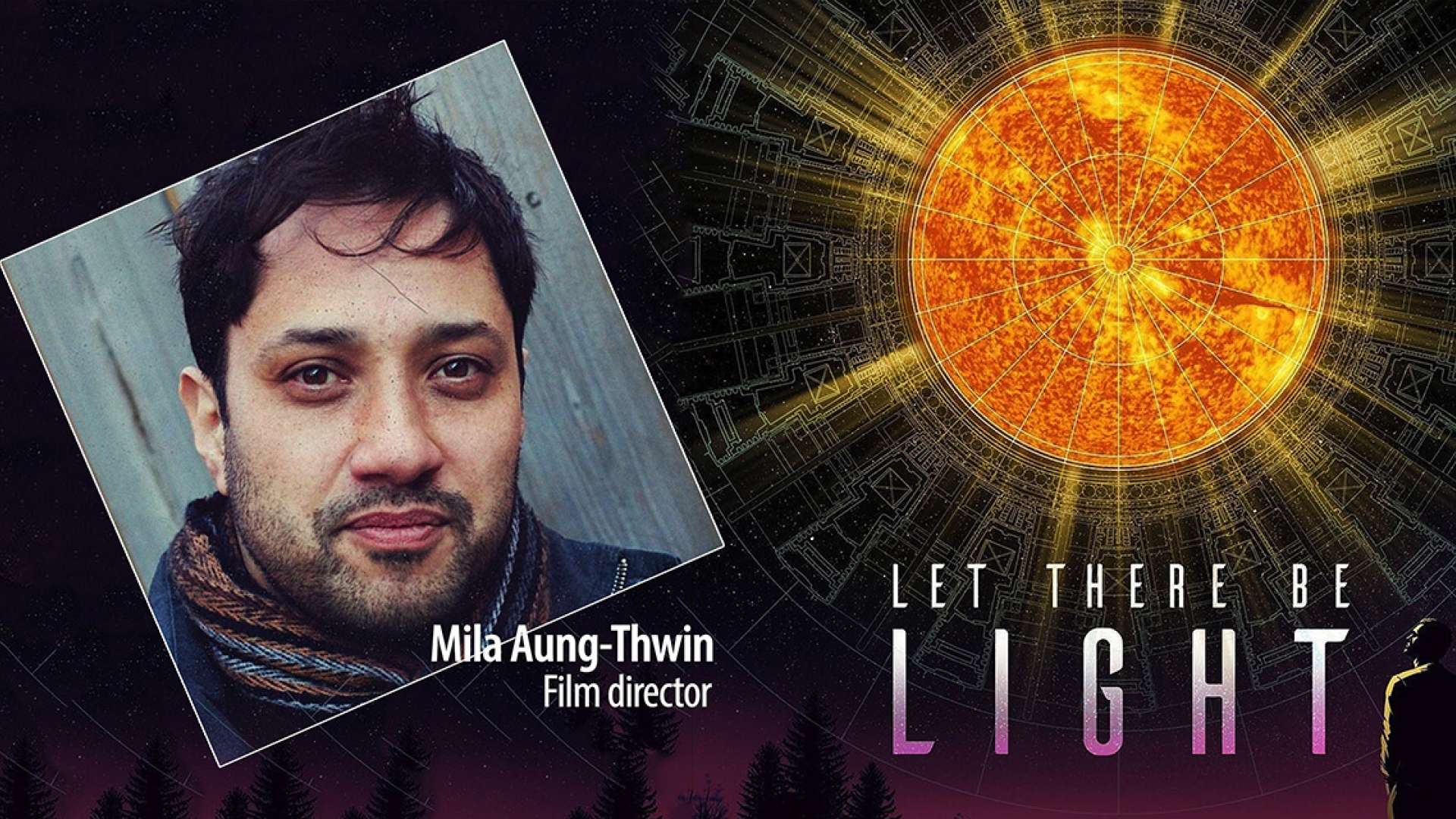
The documentary
Let There Be Light
narrates the story of dedicated scientists working to make nuclear
fusion a reality: unleashing perpetual, inexpensive and clean energy for
humanity. The possibility that fusion, which powers the Sun, could be
achievable on Earth as an energy source has driven scientists for almost
a century. After decades of enormous international efforts, a massive
push is now underway to demonstrate that fusion can work in an
experimental setting. In the south of France, scientists from 35
countries are building the most complex machine ever attempted. This
endeavour, named
ITER, if successful, will illuminate the way to produce clean, cheap, and abundant energy for millions of years.
The film has been awarded the
University of Bergen's Gulluglen Award at the Bergen International Film Festival in 2017 and the
Artistic Vision Award at the Big Sky Documentary Film Festival the same year.
Follow the upcoming
27th IAEA Fusion Energy Conference (FEC 2018),
which will provide a forum for discussion of key physics and technology
issues as well as innovative concepts of direct relevance to the use of
nuclear fusion as a source of energy.
Co-founder of
EyeSteelFilm and co-director of the movie, Mila Aung-Thwin has produced more than 25 feature documentaries, including
Up the Yangtze,
Forest of the Dancing Spirits, and the Emmy Award-winning
Last Train Home.
He served for five years as president of the Rencontres International
du Documentaire (RIDM), Montreal’s international documentary festival,
as well as a juror for the International Emmy Awards, AFI DOCS, the New
Zealand Film Awards, and the Sundance Film Festival. He has also taught
documentary film programs to students in places such as Inukjuak,
Canada, and Yangon, Myanmar.
You had not worked in fusion or anything related to ‘nuclear’ before this film. Why did you choose to focus on this topic?
To be honest, I hadn’t done that much in science documentaries in
general. But I’ve always been interested in the human side of science,
why people are driven to discover new things and solve big problems. I
knew energy and energy resources were big problems, and I wanted to make
a film about potential pie-in-the-sky future sources of energy. And I
was months into the research before I heard that ITER was being built.
And the more I found out about it, the more interested I became. But I
was also increasingly confused why more people weren’t talking about it.
So, to me that’s an excellent starting point for a documentary.
The movie zips through a few fusion projects although several
other ambitious initiatives are underway around the world. Why did you
decide to feature ITER, Wendelstein 7-X, General Fusion and LPPFusion?
I suppose there were simply too many examples to choose from if I
were to do a proper survey of everything. The film is meant to
illuminate some of the approaches to fusion, some of the challenges, as
told by unique individuals. When you make a film, one of the big things
that can kill the flow of the story is simply making a list: “here’s one
example, here’s another, here’s another…”. What you want to do instead
is find contrasts and counter-examples to keep the audience engaged. If
they get excited by this, then they can go and read more about all the
other examples. So, I had to choose unique pieces of the puzzle, and
unique characters. I wanted ideas and approaches that contrasted each
other as much as they complimented.
What do you think about the many start-ups that have recently sprung up doing their own fusion projects?
In general, I think it’s great that there’s more private entities
supporting innovation. Perhaps we are at the level of technology now
where start-ups can compete with national labs and agencies, as they
seem to be in space travel. It was explained to me that that is indeed
the aim of national labs: to push research into areas where it is not
profitable in the short-term, so that it gets to the point where the
free market can come in and innovate once the proof-of-concept exists.
So, in that case it’s great. However, I think – like most who have
studied the history of fusion – I am wary of those who promise more than
they can deliver.
The documentary juxtaposes the complexity and scale of the
ITER machine and the human stories of the people involved in the quest
for fusion. What inspired you to focus on these individual stories?
In brief, it’s very hard to care about a machine in a film. We tend
to care about people and their challenges. We only can comprehend that a
machine is hard to build if we see a person struggling because we need
to understand the human scale, human know-how and human motivation.
Also, I wanted to celebrate the heroes of fusion. I’ve met a lot of
people who work in fusion who have shown this to their friends and
family and the reactions have been that they finally understand that
whet they are dedicating their lives to is indeed very cool and not
incomprehensible.
What was the most surprising thing about fusion energy that you learned while working on the documentary?
The most surprising thing was the level of international cooperation
required to make ITER, and the fact that it dated back to the cold war.
This ongoing pursuit of the dream of fusion energy is so different from
how most people experience progress in daily life. We don’t see
decades-long struggles to get things done very often – to the point
where we don’t even know if they are possible. We’ve resigned ourselves
to short-term goals and don’t think we can change the future for the
better. We don’t think we can collaborate for the common good. The story
of ITER refutes that way of thinking.
Mila Aung-Thwin, ITER Director-General Bernard Bigot and Scientific Director of IPP Sibylle Gunter will speak at the session on "Fusion Energy for Peace and Sustainable Development" — during the 62nd IAEA General Conference on Wednesday, 19 September 2018, starting at 9:30 AM in Vienna. The event will review the
progress in the quest for controlling thermonuclear fusion for energy
production, the potential for fusion to revolutionize both technology
and society, the challenges ahead and the role of the IAEA.
Right after the event, Let There Be Light will be shown at 10:40 AM.