
Michele Kearney's Nuclear Wire - Major Energy and Environmental News and Commentary affecting the Nuclear Industry. Nuclear Activities
Thursday, July 14, 2016

Subsidy for Hinkley nuclear power station quintuples to £30bn
Subsidy for Hinkley nuclear power station quintuples to £30bn
http://www.ft.com/cms/s/0/b8e24306-48e5-11e6-8d68-72e9211e86ab.html#axzz4EPVZPa6D
NY PSC staff proposes up to $7.6B in subsidies for upstate nuclear plants
NY PSC staff proposes up to $7.6B in subsidies for upstate nuclear plants
https://www.snl.com/Interactivex/article.aspx?CdId=A-37062880-12843
How Technology From the 50s Could Answer Our Growing Energy Problem
How Technology From the 50s Could Answer Our Growing Energy Problem
http://www.huffingtonpost.com/sherry-gray/post_12583_b_10942568.html
Why Does Nuclear Energy Account For Less Than a Fifth of Our National Energy Mix?
Why Does Nuclear Energy Account For Less Than a Fifth of Our National Energy Mix?
https://morningconsult.com/opinions/nuclear-energy-account-less-fifth-national-energy-mix/
How America Could Go Dark
How America Could Go Dark
Dozens of break-ins examined by The Wall Street Journal show how orders to secure the power grid have still left tens of thousands of utility substations vulnerable to terrorist saboteurs
http://www.wsj.com/articles/how-america-could-go-dark-1468423254
Nuclear advocates eye former coal plant sites for small reactors
Nuclear advocates eye former coal plant sites for small reactors
http://midwestenergynews.com/2016/07/13/nuclear-advocates-eye-former-coal-plant-sites-for-small-reactors/Nuclear competitiveness falling with rise of renewables, says government watchdog
Nuclear competitiveness falling with rise of renewables, says government watchdog
http://www.businessgreen.com/bg/analysis/2464823/nuclear-competitiveness-falling-with-rise-of-renewables-says-government-watchdog
UK Energy Minister underlines nuclear's role
UK Energy Minister underlines nuclear's role
The UK's decision to leave the European Union has not changed the country's commitment to investing in low-carbon energy, including new nuclear, nor its efforts to tackle climate change, Energy Minister Andrea Leadsom told members of parliament today. Meanwhile, a report issued by the National Audit Office says the UK "lacks a proven, skilled supply chain to support the construction of a new power station".http://world-nuclear-news.org/UK-Energy-Minister-underlines-nuclears-role-despite-Brexit-14071602.html
Exelon ready to make investment in New York plants
Exelon ready to make investment in New York plants
Entergy is discussing a potential sale of the James A Fitzpatrick nuclear power plant to Exelon, offering the possibility of keeping the single-unit plant in operation beyond 2017. Exelon has confirmed that it will invest millions of dollars to keep Fitzpatrick and its other nuclear power plants in upstate New York in operation if a support mechanism proposed by the New York State Department of Public Service last week is approved.http://world-nuclear-news.org/C-Exelon-ready-to-make-investment-in-New-York-plants-1407167.html
DOE Releases Final Request for Proposal for Waste Isolation Pilot Plant (WIPP) Transportation Services Procurement
DOE Releases Final Request for Proposal for Waste Isolation Pilot Plant (WIPP) Transportation Services Procurement
July 14, 2016 - 1:00pm
Cincinnati
-- The U.S. Department of Energy (DOE) Environmental Management
Consolidated Business Center (EMCBC) today issued a Final Request for
Proposal (RFP) for Waste Isolation Pilot Plant (WIPP) Transportation
Services. An Indefinite-Delivery Indefinite-Quantity (IDIQ) contract,
utilizing Firm-Fixed Price (FFP) task orders, that may include separate
Contract Line Item Numbers (CLINs) (within Task Orders) for specified
cost reimbursable (no fee) items such as State permits and Use fees, New
Mexico Gross Receipts Tax, fuel, and a safe driving bonus. The Final
RFP is established as a total Small Business set-aside with a five year
ordering period. The current WIPP Transportation Services contracts held
by CAST Specialty Transportation, Inc. and Visionary Solutions, LLC
will expire on January 12, 2017 and July 27, 2017, respectively.The WIPP Transportation Services are for providing facilities, personnel, and equipment to operate a local terminal within the Greater Carlsbad, NM area (10 mile perimeter of Carlsbad) and provide transportation and maintenance services necessary to support the WIPP. This includes, but is not limited to, carrier services for the safe transport of contact-handled (CH) and remote-handled (RH) transuranic (TRU) wastes and mixed hazardous constituents, including polychlorinated biphenyls (PCBs) and asbestos, between various DOE sites across the country and other defense-related TRU waste generator sites to the WIPP site, near Carlsbad, New Mexico.
Additional information is available via the procurement website at: https://www.emcbc.doe.gov/SEB/wipp_transportation_services/index.php
DOE has requested that all proposals be submitted to the designated procurement address(es) no later than August 29, 2016.
Hooked! The Unyielding Grip of Fossil Fuels on Global Life
Hooked!
The Unyielding Grip of Fossil Fuels on Global Life
By Michael T. Klare
Here’s the good news: wind power, solar power, and other renewable forms of energy are expanding far more quickly than anyone expected, ensuring that these systems will provide an ever-increasing share of our future energy supply. According to the most recent projections from the Energy Information Administration (EIA) of the U.S. Department of Energy, global consumption of wind, solar, hydropower, and other renewables will double between now and 2040, jumping from 64 to 131 quadrillion British thermal units (BTUs).
And here’s the bad news: the consumption of oil, coal, and natural gas is also growing, making it likely that, whatever the advances of renewable energy, fossil fuels will continue to dominate the global landscape for decades to come, accelerating the pace of global warming and ensuring the intensification of climate-change catastrophes.
Click here to read more of this dispatch.http://www.tomdispatch.com/post/176164/tomgram%3A_michael_klare%2C_fossil_fuels_forever/#more
Study shows bulk of fuel still in crippled Fukushima No. 2 reactor
Study shows bulk of fuel still in crippled Fukushima No. 2 reactor
http://english.kyodonews.jp/news/2016/07/421290.html
The Fracturing Of Chevron Deference
Energy Department Announces Up To $15 Million To Help Improve The Security And Resilience Of The Nation’s Power Grid
Energy Department Announces Up To $15 Million To Help Improve The Security And Resilience Of The Nation’s Power Grid
By
By U.S. Department of Energy,
/ Wednesday, July 13, 2016 5:00 PM

WASHINGTON – As part of the Obama Administration’s commitment to
protecting America’s critical infrastructure, U.S. Deputy Energy
Secretary Elizabeth Sherwood-Randall today announced new funding to
strengthen and protect the nation’s electric grid from cyber and
physical attacks. The Energy Department will provide up to $15 million,
subject to congressional appropriations, to support efforts by the
American
|
Small Nuclear for the Future?
Small Nuclear for the Future?
Reactor size does matter according to 75% of nuclear powers top executives. In Nuclear Energy Insider’s exclusive report, three-quarters of industry executives expect their focus on Small Modular Reactors to increase over the next 5 years; signalling a shift away from large scale reactors.
But with only 60% thinking the UK is ready for them, this report outlines what the industry’s key decision makers think must be done to ensure commercial deployment is achieved.
Access your complimentary copy of the industry’s SMR UK report and keep up to date with the views of nuclear energy’s key decision makers right here
http://1.nuclearenergyinsider.com/LP=12963?utm_campaign=4749%2014JUN16%20TA.htm&utm_medium=email&utm_source=Eloqua&elqTrackId=ca8bc3babb56405384bc42050979025a&elq=f121421b1cca4ef5a04121da9c2e18f7&elqaid=20189&elqat=1&elqCampaignId=8904
If you have any comments or questions, then please do let me know.
Many thanks,
John
John Furness
Senior Industry Analyst
Nuclear Energy Insider
+44 (0)207 375 7528
JFurness@nuclearenergyinsider.
Wednesday, July 13, 2016
In Wake of Deal to Save Fitzpatrick, James Hansen & Other Scientists, Environmentalists Urge New York to Protect Nuclear Plants
In Wake of Deal to Save Fitzpatrick, James Hansen & Other Scientists, Environmentalists Urge New York to Protect Nuclear Plants
http://www.environmentalprogress.org/big-news/2016/7/13/in-wake-of-deal-to-save-fitzpatrick-james-hansen-other-scientists-environmentalists-urge-new-york-to-protect-nuclear-plants
Department of Energy Awards $8 Million To Westinghouse For Nuclear Research The U.S. Department of Energy (DOE) has selected Westinghouse Electric Company and its research partners to receive $8 million in awards over the next three years to fund a series of nuclear power research projects. A total of 11 different projects are to receive funding, the company said. The awards support Westinghouse research in a number of areas including the area of self-powered wireless sensors and laser-based 3D printing. “This is a valuable opportunity for Westinghouse to advance our most innovative nuclear technologies while collaborating across the industry with the best minds in the most advanced research facilities,” said Jim Brennan, Westinghouse senior vice president of the Engineering Center of Excellence. “Our priority is to develop technology for existing nuclear facilities and advanced nuclear plants to assure the vitality and economic viability of the nuclear fleet.” Read more and comment
http://nuclearstreet.com/nuclear_power_industry_news/b/nuclear_power_news/archive/2016/07/13/department-of-energy-awards-_2400_8-million-to-westinghouse-for-nuclear-research-071301#.V4aqvY6XQkh
Japanese Nuclear Sector Suffers More Setbacks
Japanese Nuclear Sector Suffers More Setbacks
http://www.powermag.com/japanese-nuclear-sector-suffers-more-setbacks/
The owner of the closed Vermont Yankee nuclear power plant is seeking to ship hundreds of thousands of gallons of radioactive water to an Idaho processing facility
The owner of the closed Vermont Yankee nuclear power plant is seeking to ship hundreds of thousands of gallons of radioactive water to an Idaho processing facility
http://www.greenfieldreporter.com/view/story/324448e00b0b42629f30e1a8b2292041/VT--Nuclear-Plant-Water
Standoff Didn't Stop Turkey, Russia From Working Together on Nuclear Power
Standoff Didn't Stop Turkey, Russia From Working Together on Nuclear Power
Russia and Turkey have maintained the implementation of joint projects in the sphere of nuclear energy, as well as of energy transportation even during downturn in bilateral relations, Turkish Minister of Economy Nihat Zeybekci told Sputnik on Wednesday.
http://sputniknews.com/middleeast/20160713/1042893046/turkey-russia-minister-interview.html
Russian, Chinese Officials Discuss Space Cooperation, Nuclear Power
Russian, Chinese Officials Discuss Space Cooperation, Nuclear Power
http://sputniknews.com/business/20160713/1042861796/russian-chinese-officials-space-nuclear.html
Entergy in talks to sell New York nuclear power plant
Entergy in talks to sell New York nuclear power plant
http://www.nola.com/business/index.ssf/2016/07/entergy_nuclear_plant_sale.html
UK regulators provide update on reactor design assessments
UK regulators provide update on reactor design assessments
UK regulators expect to complete the Generic Design Assessment process for the Westinghouse AP1000 and Hitachi-GE's UK Advanced Boiling Water Reactor in March and December of 2017, respectively. In its quarterly GDA report for February to April 2016 issued yesterday, the Office for Nuclear Regulation also said it has "developed 'entry criteria' to provide transparency on the factors that underpin our decision on readiness to commence GDA" for China General Nuclear's HPR1000 design.http://world-nuclear-news.org/RS-UK-regulators-provide-update-on-reactor-design-assessments-13071601.html
Hinkley Point C awaits EDF board vote; UK backs new build after Brexit
US reactor closures raise urgency of new decommissioning rules
SMR developers shrug off Brexit fears to deepen ties with UK suppliers
NRC Blog Update: Part II: How the NRC Uses a Defense-in-Depth Approach Today to Protect the Public
Part II: How the NRC Uses a Defense-in-Depth Approach Today to Protect the Public
Posted by on July 13, 2016
Senior Program Manager
Division of Risk Assessment, Performance and Reliability Branch
Defense-in-depth is a central theme in the NRC’s regulatory oversight of the nuclear power industry. As our agency historian, Tom Wellock, discussed in Monday’s post, the concept of defense-in-depth emerged during the trench warfare of World War I. The idea of multiple lines of defense was applied to nuclear safety in the 1950s as the leading concept for protecting the public from the consequences of a nuclear reactor accident.
The NRC’s predecessor agency, the U.S. Atomic Energy Commission, spelled out defense-in-depth in a 1957 report called WASH-740, Possibilities and Consequences of Major Accidents in Large Nuclear Power Plants. “Should some unfortunate sequence of failures lead to destruction of the reactor core … no hazard to the safety of the public would occur unless two additional lines of defense were also breached,” the report said.
These words are at the heart of defense-in-depth as it has been practiced for six decades: multiple layers of defense to protect against accidents and their effects to ensure the risk to the public is acceptably low.
In a recent report issued this spring, Historical Review and Observations of Defense-in-Depth (NUREG/KM-0009), the NRC looks at how the concept has evolved in practice over the years. It also includes views from other government agencies and the international community.
As the report explains, defense-in-depth recognizes that our knowledge is imperfect. Although we plan for all conceivable accidents, the unexpected may still occur. Even if we have anticipated an event, its characteristics and impacts may be unpredictable. Our design and operation of nuclear plants need to be robust enough to compensate for this lack of knowledge. Defense-in-depth offers multiple layers of protection in case one or more layers fail.
So we don’t just rely on preventing an accident; we also need strong defenses to mitigate the effects of any accident that does occur. This applies to nuclear power plants, waste management and security as well.
In practice, defense-in-depth addresses three principles that should be factored into the design and operation of systems and components to provide additional confidence that an accident would not compromise the defensive layers:
- Redundancy means more than one component performs the same function – for example, having multiple pumps instead of a single one;
- Independence means these multiple components rely on separate and distinct attributes to function – the multiple pumps have separate piping from the water tank to where they discharge, and are housed in separate compartments; and
- Diversity means the multiple components performing the same function rely on different design features to operate – motor-driven pumps versus steam-powered pumps.
 In reactor safety, the layers of defense might be:
- Maintain reactor stability by limiting the ability of events to disrupt operation (with protective measures such as fire-safe or flood-tight doors, seismically designed buildings)
- Protect the reactor should operation be disrupted (emergency reactor core cooling with redundant pumps)
- Barrier integrity to guard against a release of radioactivity to the environment (leak-tight containment structures, filtered vents, containment sprays) and
- Protect the public if a release does occur (emergency preparedness plans)
PG&E launches distributed energy resource projects testing technology to unlock benefits of the grid
PG&E launches distributed energy resource projects testing technology to unlock benefits of the grid
http://www.pennenergy.com/articles/pennenergy/2016/07/pg-e-launches-distributed-energy-resource-projects-testing-technology-to-unlock-benefits-of-the-grid.html?eid=288118515&bid=1460729
Energy And America’s Best Interest – #EIAConf
Energy And America’s Best Interest – #EIAConf
http://breakingenergy.com/2016/07/12/energy-and-americas-best-interest-eiaconf/?utm_source=hs_email&utm_medium=email&utm_content=31600098&_hsenc=p2ANqtz-84Xj6PWBwgpA1OsIPIckOyFVSAsjoGeXCHmgdK7fs9H2e2nVWetcwH3aIkmwLd3L676ZgZzrQmmNxd4b0sNUEfEczL0g&_hsmi=31600098
Tuesday, July 12, 2016
Guest Post: I ran Israel's Atomic Energy Commission. I know the Iran deal is working.
It’s
hard to believe it, but it’s been a year since the United States and
five other major powers signed an agreement with Iran to defang its
nuclear program.
At
the time, Prime Minister Benjamin Netanyahu was making dire warnings
that the agreement might confront Israel with the specter of a second
Holocaust. He urged American Members of Congress to reject the agreement
-- casting it as a disaster for Israeli security.
Yet
while the PM made his opinions known loud and clear, many senior
Israeli military and intelligence officers, nuclear experts and
strategic analysts were quietly arguing that this was a good deal for
Israel that would actually make us much safer. As one of these experts, I
did not hesitate to speak out openly about my strong support for the
agreement.
As
the former Director General of the Israeli Atomic Energy Commission, I
was one of more than a dozen Israeli security and nuclear experts who,
with J Street’s help, came to the United States to make this case
directly to US lawmakers. Thanks in part to our efforts -- your efforts
and mine -- we succeeded in defeating those who tried to undermine
diplomacy and kill the agreement.
Since
the deal was signed, Iran has reduced its stockpile of low-enriched
uranium by 98 percent -- leaving them with an amount far below what is
needed to build even one bomb. They have dismantled 12,000 centrifuges,
blocking their capacity to enrich uranium. They have agreed to an
increased presence of IAEA inspectors on the ground, the installation of
the most modern monitoring equipment and unprecedented surveillance of
the entire uranium and centrifuge supply chains. Finally, they have
removed and disabled the core of the plutonium reactor they had almost
finished constructing in Arak and filled it in with cement.
Simply
put, every single one of their pathways to a nuclear weapon has been
blocked. The deal has been a major success. Don’t just take my word for
it -- listen to what other senior Israeli security leaders have to say.
- IDF Chief of Staff Lieutenant General Gadi Eisenkot: “The deal has actually removed “the most serious danger to Israel’s existence for the foreseeable future, and greatly reduced the threat over the longer term.”
- Former Mossad chief Ephraim Halevy: “This agreement closes the roads and blocks the road to Iranian nuclear military capabilities for at least a decade. And I believe that the arrangements that have been agreed between the parties give us a credible answer to the Iranian military threat, at least for a decade, if not longer.”
- Former head of Israeli Military Intelligence Amos Yadlin: “The agreement rolls back the Iranian nuclear program to the point of a breakout time of one year, reduces the scope of the program, and places it under a verification regime that is much more invasive than the current system and includes access to military facilities. For at least the next ten years, the threat of nuclear armament in Iran has been reduced.”
- Lieutenant General Moshe Ya’alon, Israel’s Defense Minister until quite recently, made clear last month that Israel does not face an existential threat from Iran.
These
colleagues of mine know what they’re talking about. For decades they
were responsible for Israel’s security. We all know that this agreement
wasn’t perfect -- no agreement could be. Iran remains a threat to Israel
and to the region -- and the deal, focused on stopping Iran’s nuclear
program, could not also address its support for terror. We felt that our
top priority had to be ensuring that a malign actor like Iran cannot
gain access to nuclear weapons.
Now,
thanks to the incredible monitoring and verification work of IAEA
inspectors, this deal ensures that Iran cannot gain access to the bomb.
It gives us -- Israelis and Americans -- time, and incredible insight
and access into what Iran is and isn’t doing. It has disrupted and
dramatically rolled back a nuclear program that was extensive and
accelerating, and instead given us space to develop new defensive
systems against any future threats. And it’s accomplished all that
without the need for a dangerous and disastrous war -- without needing
to put Israeli soldiers and civilians in harm’s way.
After
a year, the truth is plain. With all due respect to Prime Minister
Netanyahu, he was flat out wrong -- and my colleagues and I were right.
This was and remains a good agreement. It’s made Israel and the world safer.
For that, I know that all of us are thankful.
- Uzi Eilam
Former Director of Israel's Atomic Energy Commission
France's 'underground Chernobyl' moves step closer
France's 'underground Chernobyl' moves step closer
http://www.thelocal.fr/20160712/frances-underground-chernobyl-moves-a-step-closer
NKorea keeping nuclear test site ready: US
NKorea keeping nuclear test site ready: US
http://www.thedailystar.net/world/asia/nkorea-keeping-nuclear-test-site-ready-us-1252543
Iranian official briefs public about implementation of nuclear deal
Iranian official briefs public about implementation of nuclear deal
http://en.trend.az/iran/politics/2556465.html
Situation of storing and treatment of accumulated water including highly concentrated radioactive materials at Fukushima Daiichi Nuclear Power Station (260th Release)
Situation of storing and treatment of accumulated water including highly concentrated radioactive materials at Fukushima Daiichi Nuclear Power Station (260th Release)
http://www.noodls.com/view/9D4F24B5ED46B13E55B52AD7AC2D7C632923BB9ETribunal Rejects Beijing’s Claims to South China Sea
Tribunal Rejects Beijing’s Claims to South China Sea
Court in The Hague says ‘nine-dash’ line contravenes U.N. convention on maritime law
http://www.wsj.com/articles/chinas-claim-to-most-of-south-china-sea-has-no-legal-basis-court-says-1468315137?
China's South China Sea Claims Dashed by Hague Court Ruling
http://www.bloomberg.com/news/articles/2016-07-12/china-no-historic-right-to-south-china-sea-resources-court-says
Beijing defiant ahead of court ruling on its claims in South China Sea
Global Times, a nationalist Communist party tabloid, warns ‘provocateurs are doomed to fail’ in hours before verdict is handed downhttps://www.theguardian.com/world/2016/jul/12/china-defiant-ahead-of-court-ruling-on-its-claims-in-south-china-sea
We Are The Empire Of U.S. Military Interventions, Alien Disaster Movies, and Star Wars
Tomgram: William Astore, We Have Met the Alien and He Is Us
Imagine a secret government facility buried
deep in the bowels of a mountain; a deluxe bomb shelter -- encased
within dense, almost fissure-less rock -- for top government officials
to ride out doomsday.
I did. A lot.
I spent an inordinate amount of time as a child reading everything I could find about a top secret complex -- a White-House-in-waiting, hospital, television studio, government offices, subterranean reservoirs, and who knows what else -- all entombed in a Virginia mountain. It was difficult for a youngster to locate much on it in those pre-Internet days, but what I did find out about Mount Weather fascinated me.
Looking back, I realize that I was captivated, and perhaps subconsciously unnerved, by the prospect of World War III. That future conflict was seemingly omnipresent, looming large in the pop cultural broth in which my brain was regularly bathed. Red Dawn and The Day After offered two possible scenarios for how such a war might be fought -- Vietnam-style in the U.S.A. or as a full-scale nuclear exchange between America and the Soviet Union. The president of that moment suggested that we might be spared the atomic devastation of The Day After through mammoth spending on a space-based missile defense system that, in the cinematic spirit of the moment, critics dubbed “Star Wars.” WarGames, on the other hand, indicated that some combination of dumb luck, a smart computer, and an impossibly young Matthew Broderick would -- at the very last moment -- save the day. (Thanks, Ferris Bueller!) And what child of the 1980s can forget that moment when your last city was destroyed in Atari’s “Missile Command”?
A survey of 1,000 grammar and high-school students conducted by an American Psychiatric Association task force from 1978 to 1980 found “the imminent threat of nuclear annihilation has penetrated deeply into their consciousness.” Their answers to questionnaires “showed that these adolescents are deeply disturbed by the threat of nuclear war, have doubt about the future, and about their own survival,” wrote John Mack, a professor of psychiatry at Harvard Medical School and a member of the task force. I don’t recall being distressed by the prospect myself, but it certainly caught my attention.
While I was reading and re-reading John Bradley’s lavishly illustrated coffee-table book, World War III: Strategies, Tactics, and Weapons, and playing with my G.I. Joes, TomDispatch regular William Astore was heading deep into another secret government facility buried within a mountain, another ground zero designed to withstand (but by then likely to be incinerated in) a nuclear holocaust. Today, Astore takes us from his younger days at shadowy Cheyenne Mountain to the darkened recesses of the cinema, where a steady diet of "space operas" and "alien disaster movies," from the iconic Star Wars to the recent U.S. box-office bomb Independence Day: Resurgence, provide a window on the twenty-first-century American experience and a funhouse mirror offering unflattering reflections of ourselves and our foundering, floundering wars. Nick Turse
We Are The Empirehttp://www.tomdispatch.com/post/176163/tomgram%3A_william_astore%2C_we_have_met_the_alien_and_he_is_us/#more
Of U.S. Military Interventions, Alien Disaster Movies, and Star Wars
By William J. Astore
Perhaps you’ve heard the expression: “We have met the enemy and he is us.” Cartoonist Walt Kelly’s famed possum, Pogo, first uttered that cry. In light of alien disaster movies like the recent sequel Independence Day: Resurgence and America’s disastrous wars of the twenty-first century, I’d like to suggest a slight change in that classic phrase: we have met the alien and he is us.
Click here to read more of this dispatch.
Monday, July 11, 2016
Encapsulated Cs from Fukushima accident?
Encapsulated Cs from Fukushima accident?
Is this credible? What could be the source? Is this molten fuel, concrete interaction? http://www.forbes.com/sites/samlemonick/2016/06/30/scientists-find-new-kind-of-fukushima-fallout/#47ce526e4126
Beyond Nuclear Wants Answers in Latest Palisades Probe
Beyond Nuclear Wants Answers in Latest Palisades Probe
http://whtc.com/news/articles/2016/jul/09/beyond-nuclear-wants-answers-in-latest-palisades-probe/
Cape Wind Project Suffers July 5 Loss at Federal Appeals Court
Cape Wind Project Suffers July 5 Loss at Federal Appeals Court
http://www.power-eng.com/articles/2016/07/cape-wind-project-suffers-july-5-loss-at-federal-appeals-court.htmlReplacing nuclear power with wind power doesn't make sense in Sweden, study shows
Replacing nuclear power with wind power doesn't make sense in Sweden, study shows
http://phys.org/news/2016-06-nuclear-power-doesnt-sweden.html
Op-Ed Solar's great and so is wind, but we still need nuclear power
Op-Ed
http://www.latimes.com/opinion/op-ed/la-oe-bryce-clean-energy-requires-nuclear-power-20160616-snap-story.html
Solar's great and so is wind, but we still need nuclear power
Wind Power: The Greatest Swindle Ever Known
Wind Power: The Greatest Swindle Ever Known
https://stopthesethings.com/2016/06/27/wind-power-the-greatest-swindle-ever-known/
NRC Blog Update: Defense in Depth Part I: A War for Safety
Defense in Depth Part I: A War for Safety
Posted by on July 11, 2016
Historian
One hundred years ago the French and German armies of World War I devised a new defensive strategy called “defense in depth.” Its aim was to prevent an enemy breakthrough of an army’s frontline with a deep system of interconnected trench lines and strong points.
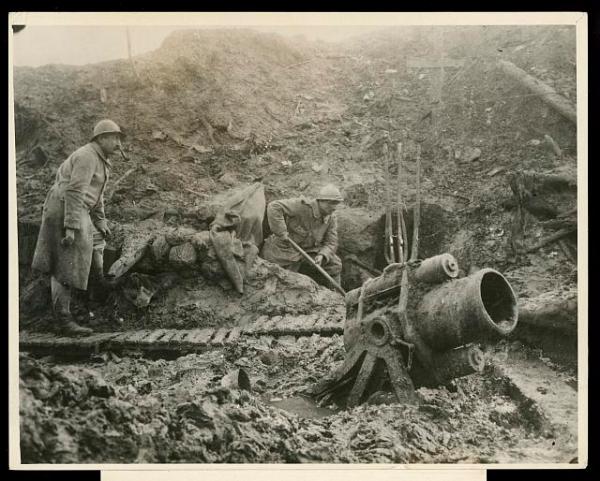
Defense in depth circa WWI. Photo courtesy of the Library of Congress
The NRC’s use of the term has roots in the Manhattan Project of World War II. Military metaphors seemed particularly apt for those charged with ensuring the safety of the early plutonium production reactors at Hanford, Washington. They worried about the potential for a reactor “catastrophe” from a radiation release of “explosive violence.” Their solution was to erect multiple “lines of defense” of trained operators and emergency personnel, carefully sealed fuel rods, shielding walls, backup cooling and power systems, and even a backup to the backup shutdown system—a final solution so drastic that it would destroy the reactor to save the operators lives. Fittingly, its moniker derived from another military term — the “last ditch” safety device.
After the war, the “lines of defense” in reactor safety were categorized into functions by Atomic Energy Commission safety committees:
- Features that made a reactor inherently safe;
- “Static,” or physical, barriers, such as containment buildings, were to halt the escape of radiation; and
- Active systems were to shut down and cool the reactor in the case of unusual conditions.
Over time, “defense in depth” replaced the scattered concept of “lines of defense.” Its first use appears to have been in 1958 to describe safety design in the plutonium extraction processes at Hanford. In a 1965 letter to Congress, AEC Chairman Glenn Seaborg applied the term to civilian reactor safety as an accident prevention and mitigating strategy.
It provided, he wrote, “multiple safeguards against the occurrence of a serious accident, and for containment of fission product release.” The term stuck.
But the story continues. The Office of Nuclear Regulatory Research has published a report on the history of defense in depth up to the present, which covers the term’s application to the whole nuclear fuel cycle. It’s a fascinating look at how this bedrock safety concept has evolved under the influence of events and new knowledge. We’ll have more on this report on Wednesday.
Consent Based Siting
Thank you for your interest in consent-based siting and participation in DOE public meetings. As a reminder, the
Invitation
for Public Comment closes on
Sunday July 31st at 11:59 PM ET. Please email your comments to
consentbasedsiting@hq.doe.gov
or submit them using the options listed in the Federal Register notice
before the closing date to have them considered in the draft summary
report.
Additionally, we are posting comments received to our website, and the first batch reflecting public input through July 1st is provided below. Comments received from July 1st - 31st
will be posted in a similar manner after July 31st.
Link to the webpage: http://www.energy.gov/ne/
Nuclear is strategic imperative for USA, says NEI
Nuclear is strategic imperative for USA, says NEI Preserving existing nuclear capacity and preparing to build large amounts of new nuclear capacity in the next decade are strategic imperatives for the USA, the Nuclear Energy Institute has told the US Department of Energy.
http://world-nuclear-news.org/NP-Nuclear-is-strategic-imperative-for-USA-says-NEI-1107168.html
Solar to Wreck Economics of Existing Power Markets
Solar to Wreck Economics of Existing Power Markets
Highlights:- Continued solar growth could lead to significant decreases in wholesale electricity prices during most peak hours.
- High solar penetrations could also impact power prices when solar does not operate, affect the frequency and severity of electricity price spikes, and impact natural gas price volatility.
- While lower wholesale prices could impact solar’s growth they will also hurt other energy sources, particularly coal and nuclear but also natural gas and energy efficiency.
- Ultimately, the price effects of solar have significant but uncertain ramifications for environmental goals, energy prices, and, ultimately, electricity market design.
http://www.theenergycollective.com/aqgilbert/2382456/solar-to-wreck-economics-of-existing-power-markets?utm_source=feedburner&utm_medium=email&utm_campaign=The+Energy+Collective+%28all+posts%29
Time For A Reality Check: More Delays Are Coming For Georgia Power’s New Vogtle Reactors
 Time For A Reality Check: More Delays Are Coming For Georgia Power’s New Vogtle Reactors
Georgia Power executives certainly won’t say it and Georgia’s utility regulators certainly won’t acknowledge it, but the reality is there are going to be additional delays at Vogtle 3&4—the already delayed and over budget new nuclear project being built by Westinghouse for the Southern Company subsidiary and a consortium of Georgia municipal utilities south of Augusta.
http://www.theenergycollective.com/djwamsted/2382457/time-for-a-reality-check-more-delays-are-coming-for-georgia-powers-new-vogtle-reactors?utm_source=feedburner&utm_medium=email&utm_campaign=The+Energy+Collective+%28all+posts%29
Second unit all set to attain criticality
Second unit all set to attain criticality
http://www.business-standard.com/article/pti-stories/second-unit-all-set-to-attain-criticality-116070801299_1.html
Bulgaria secures $80 million waste facility deal
Bulgaria secures $80 million waste facility deal
08 July 2016
Bulgaria has signed a €72 million ($80 million) agreement
with a consortium to build a radioactive waste repository for its
Kozloduy nuclear power plant that is expected start operations in 2021,
the country's energy ministry said yesterday. The consortium consists of
German Nukem Technologies, which is owned by Russia's AtomStroyExport,
and four Bulgarian companies.http://world-nuclear-news.org/WR-Bulgaria-secures-80-million-waste-facility-deal-08071601.html
Yucca or bust: Transportation at forefront of House hearing on nuclear waste
Yucca or bust: Transportation at forefront of House hearing on nuclear waste
 repository at Yucca Mountain, which was defunded in 2011.
https://www.snl.com/Interactivex/article.aspx?CdId=A-37039734-12331
The
issue of transporting nuclear waste by rail through communities and
across state lines was a subject of discussion at a U.S. House
Environment and the Economy subcommittee hearing on the ill-fated Yucca
Mountain repository in Nevada.
Against
a backdrop of radioactive waste build-up at nuclear plants across the
U.S., Chairman John Shimkus, R-Ill., opened the July 7 hearing by
criticizing the U.S. Department of Energy for pushing for a community
"consent-based siting" approach for finding alternatives to a proposed
deep geological repository at Yucca Mountain, which was defunded in 2011.https://www.snl.com/Interactivex/article.aspx?CdId=A-37039734-12331
Molten salt reactor neutronics data released
Molten salt reactor neutronics data released
08 July 2016
Transatomic Power Corporation has released technical
information on the design of its molten salt reactor (MSR), which it
says offers multiple advantages over existing generation technologies.The technical white paper issued by the Cambridge, Massachusetts-based company outlines how its 1250 MWth reactor design - the TAP MSR - uses the properties of its liquid fuel to increase fuel utilization while decreasing the overall amount of waste produced.
http://www.world-nuclear-news.org/NN-Molten-salt-reactor-neutronics-data-released-0807167.html
Best alternative energy source is nuclear
Best alternative energy source is nuclear
http://www.delmarvanow.com/story/opinion/2016/07/10/best-alternative-energy-source-nuclear/86876632/
NEI warns DOE about dangers of nuclear shutdowns, growing natural gas dependency
NEI warns DOE about dangers of nuclear shutdowns, growing natural gas dependency
https://www.snl.com/Interactivex/article.aspx?CdId=A-37047842-12587
Fukushima Update July 11, 2016
Fukushima Update July 11, 2016 –
Contaminated soils are transferred from schools to Okuma… The Iitate village office opened on July 1st… Nikkei.com asks who will pay for F. Daiichi decommissioning… Kagoshima Prefecture elects an antinuclear governor.
http://www.hiroshimasyndrome.
UK’s new nuclear plant may cost £37bn
UK’s new nuclear plant may cost £37bn
http://www.rsc.org/chemistryworld/2016/07/hinkley-point-nuclear-cost-rise
Subscribe to:
Posts (Atom)